Facebook Instagram Youtube Twitter

What is Uranium-lead Dating – Definition

Uranium-lead dating is based on the measurement of the first and the last member of the uranium series. Uranium-lead dating is one of the oldest radiometric dating methods. Radiation Dosimetry

Radiometric dating (or radioactive dating) is any technique used to date organic and also inorganic materials from a process involving radioactive decay. The method compares the abundance of a naturally occurring radioactive isotope within the material to the abundance of its decay products, which form at a known constant rate of decay.

The radioactive decay law states that the probability per unit time that a nucleus will decay is a constant, independent of time. This constant is called the decay constant and is denoted by λ, “lambda”. This constant probability may vary greatly between different types of nuclei, leading to the many different observed decay rates. The radioactive decay of certain number of atoms (mass) is exponential in time.

Radioactive decay law: N = N0.e-λt

One of the oldest radiometric dating methods is uranium-lead dating. The age of the earth’s crust can be estimated from the ratio between the amounts of uranium-238 and lead-206 found in geological specimens. The long half-life of the isotope uranium-238 (4.51×10⁹ years) makes it well-suited for use in estimating the age of the earliest igneous rocks and for other types of radiometric dating, including uranium–thorium dating and uranium–uranium dating.

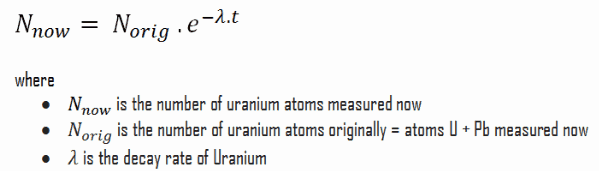
Uranium-lead dating is based on the measurement of the first and the last member of the uranium series, which is one of three classical radioactive series beginning with naturally occurring uranium-238. This radioactive decay chain consists of unstable heavy atomic nuclei that decay through a sequence of alpha and beta decays until a stable nucleus is achieved. In case of uranium series, the stable nucleus is lead-206. The assumption made is that all the lead-206 nuclei found in the specimen today were originally uranium-238 nuclei.  That means at the crust’s formation the specimen contained no lead-206 nuclei. If no other lead isotopes are found in the specimen, this is a reasonable assumption. Under this condition, the age of the sample can be calculated by assuming exponential decay of uranium-238. That is:

uranium-lead method - age of the Earth

Uranium-lead dating method is usually performed on the mineral zircon. Zircons from Jack Hills in Western Australia, have yielded U-Pb ages up to 4.404 billion years, interpreted to be the age of crystallization, making them the oldest minerals so far dated on Earth.

Age of the Earth – Uranium-lead Dating

The age of the Earth is about 4.54 billion years. This dating is based on evidence from radiometric age-dating of meteorite material and is consistent with the radiometric ages of the oldest-known terrestrial and lunar samples.


References:

Radiation Protection:

  1. Knoll, Glenn F., Radiation Detection and Measurement 4th Edition, Wiley, 8/2010. ISBN-13: 978-0470131480.
  2. Stabin, Michael G., Radiation Protection and Dosimetry: An Introduction to Health Physics, Springer, 10/2010. ISBN-13: 978-1441923912.
  3. Martin, James E., Physics for Radiation Protection 3rd Edition, Wiley-VCH, 4/2013. ISBN-13: 978-3527411764.
  4. U.S.NRC, NUCLEAR REACTOR CONCEPTS
  5. U.S. Department of Energy, Nuclear Physics and Reactor Theory. DOE Fundamentals Handbook, Volume 1 and 2. January 1993.

Nuclear and Reactor Physics:

  1. J. R. Lamarsh, Introduction to Nuclear Reactor Theory, 2nd ed., Addison-Wesley, Reading, MA (1983).
  2. J. R. Lamarsh, A. J. Baratta, Introduction to Nuclear Engineering, 3d ed., Prentice-Hall, 2001, ISBN: 0-201-82498-1.
  3. W. M. Stacey, Nuclear Reactor Physics, John Wiley & Sons, 2001, ISBN: 0- 471-39127-1.
  4. Glasstone, Sesonske. Nuclear Reactor Engineering: Reactor Systems Engineering, Springer; 4th edition, 1994, ISBN: 978-0412985317
  5. W.S.C. Williams. Nuclear and Particle Physics. Clarendon Press; 1 edition, 1991, ISBN: 978-0198520467
  6. G.R.Keepin. Physics of Nuclear Kinetics. Addison-Wesley Pub. Co; 1st edition, 1965
  7. Robert Reed Burn, Introduction to Nuclear Reactor Operation, 1988.
  8. U.S. Department of Energy, Nuclear Physics and Reactor Theory. DOE Fundamentals Handbook, Volume 1 and 2. January 1993.
  9. Paul Reuss, Neutron Physics. EDP Sciences, 2008. ISBN: 978-2759800414.

See also:

Radiometric Dating

We hope, this article, Uranium-lead Dating, helps you. If so, give us a like in the sidebar. Main purpose of this website is to help the public to learn some interesting and important information about radiation and dosimeters.

What is Radiation Dose – Definition

Radiation dose is a measure of the amount of exposure to ionizing radiation. It is known, that ionizing radiation can penetrate the human body or an object. The energy absorbed from this exposure to radiation is called a radiation dose. Radiation Dosimetry

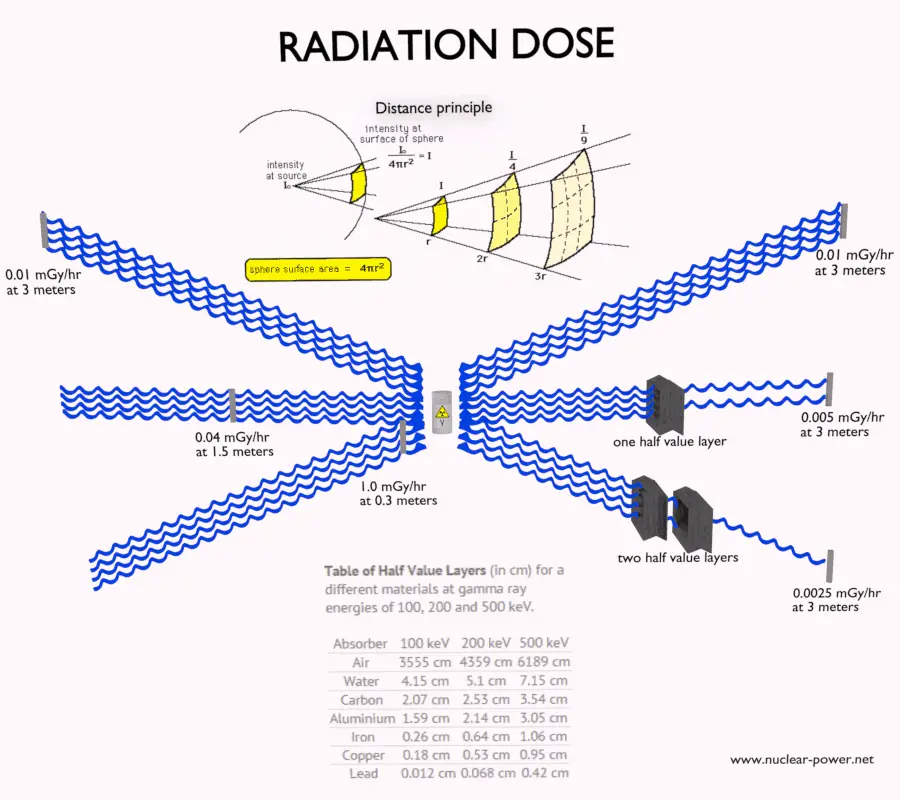
Radiation doseRadiation dose is a measure of the amount of exposure to ionizing radiation. It is known, that ionizing radiation can penetrate the human body or an object. The energy absorbed from this exposure to radiation is called a radiation dose or simply a dose: absorbed, equivalent, and effective:

  • Absorbed dose,
  • Equivalent dose,
  • Effective dose.

Why we deal with a radiation dose? In previous chapters, we have discussed radioactivity and the intensity of a radioactive source, measured usually in becquerels. But any radioactive source represents no biological risk as long as it is isolated from the environments. However, when people or another system (also non-biological) are exposed to radiation, energy is deposited in the material and radiation dose is delivered.

It is therefore very important to distinguish between radioactivity of a radioactive source and the radiation dose which may result from the source. Generally, the radiation dose depends on the following factors regarding to the radioactive source:

  • Activity. Activity of the source directly influences the radiation dose deposited in the material.
  • Type of radiation. Each type of radiation interacts with matter in a different way. For example charged particles with high energies can directly ionize atoms. On the other hand electrically neutral particles interacts only indirectly, but can also transfer some or all of their energies to the matter.
  • Distance. The amount of radiation exposure depends on the distance from the source of radiation. Similarly to a heat from a fire, if you are too close, the intensity of heat radiation is high and you can get burned. If you are at the right distance, you can withstand there without any problems and moreover it is comfortable. If you are too far from heat source, the insufficiency of heat can also hurt you. This analogy, in a certain sense, can be applied to radiation also from radiation sources.
  • Time. The amount of radiation exposure depends directly (linearly) on the time people spend near the source of radiation.
  • Shielding. Finally, the radiation dose also depends on the material between the source and the object. If the source is too intensive and time or distance do not provide sufficient radiation protection, the shielding can be used.

The danger of ionizing radiation lies in the fact that the radiation is invisible and not directly detectable by human senses. People can neither see nor feel radiation, yet it deposits energy to the molecules of the body. The energy is transferred in small quantities for each interaction between the radiation and a molecule and there are usually many such interactions.

In nuclear power plants the central problem is to protect personal and the environment against gamma rays and neutrons, because the ranges of charged particles (such as beta particles and alpha particles) in matter are very short. On the other hand we must deal with shielding of all types of radiation, because each nuclear reactor is a significant source of all types of ionizing radiation.

See also: Gamma Ray Attenuation

See also: Neutron Shielding

References:

Radiation Protection:

  1. Knoll, Glenn F., Radiation Detection and Measurement 4th Edition, Wiley, 8/2010. ISBN-13: 978-0470131480.
  2. Stabin, Michael G., Radiation Protection and Dosimetry: An Introduction to Health Physics, Springer, 10/2010. ISBN-13: 978-1441923912.
  3. Martin, James E., Physics for Radiation Protection 3rd Edition, Wiley-VCH, 4/2013. ISBN-13: 978-3527411764.
  4. U.S.NRC, NUCLEAR REACTOR CONCEPTS
  5. U.S. Department of Energy, Nuclear Physics and Reactor Theory. DOE Fundamentals Handbook, Volume 1 and 2. January 1993.

Nuclear and Reactor Physics:

  1. J. R. Lamarsh, Introduction to Nuclear Reactor Theory, 2nd ed., Addison-Wesley, Reading, MA (1983).
  2. J. R. Lamarsh, A. J. Baratta, Introduction to Nuclear Engineering, 3d ed., Prentice-Hall, 2001, ISBN: 0-201-82498-1.
  3. W. M. Stacey, Nuclear Reactor Physics, John Wiley & Sons, 2001, ISBN: 0- 471-39127-1.
  4. Glasstone, Sesonske. Nuclear Reactor Engineering: Reactor Systems Engineering, Springer; 4th edition, 1994, ISBN: 978-0412985317
  5. W.S.C. Williams. Nuclear and Particle Physics. Clarendon Press; 1 edition, 1991, ISBN: 978-0198520467
  6. G.R.Keepin. Physics of Nuclear Kinetics. Addison-Wesley Pub. Co; 1st edition, 1965
  7. Robert Reed Burn, Introduction to Nuclear Reactor Operation, 1988.
  8. U.S. Department of Energy, Nuclear Physics and Reactor Theory. DOE Fundamentals Handbook, Volume 1 and 2. January 1993.
  9. Paul Reuss, Neutron Physics. EDP Sciences, 2008. ISBN: 978-2759800414.

See also:

Radiation Protection

We hope, this article, Radiation Dose, helps you. If so, give us a like in the sidebar. Main purpose of this website is to help the public to learn some interesting and important information about radiation and dosimeters.

What is Absorbed Dose – Definition

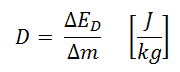
Absorbed dose is defined as the amount of energy deposited by ionizing radiation in a substance. Absorbed dose is given the symbol D.  The absorbed dose is usually measured in a unit called the gray (Gy), which is derived from the SI system. Radiation Dosimetry

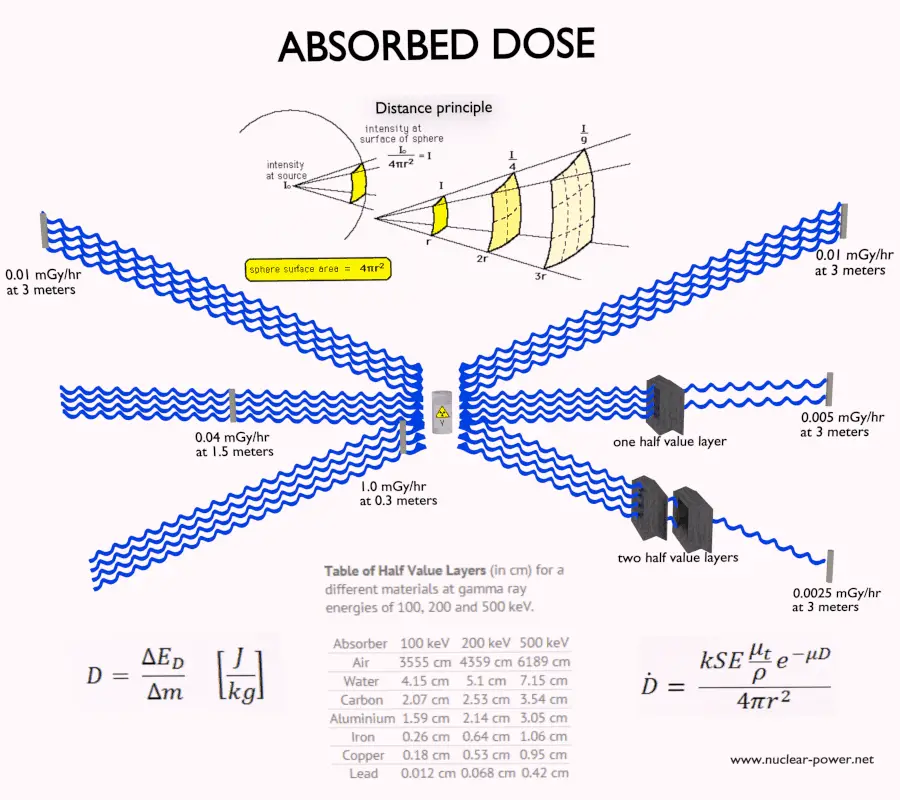
Absorbed dose is defined as the amount of energy deposited by ionizing radiation in a substance. Absorbed dose is given the symbol D.  The absorbed dose is usually measured in a unit called the gray (Gy), which is derived from the SI system. The non-SI unit rad is sometimes also used, predominantly in the USA.
absorbed dose - definition

Absorbed doseUnits of absorbed dose:

  • Gray. A dose of one gray is equivalent to a unit of energy (joule) deposited in a kilogram of a substance.
  • RAD. A dose of one rad is equivalent to the deposition of one hundred ergs of energy in one gram of any material.

Why we deal with a radiation dose? In previous chapters, we have discussed radioactivity and the intensity of a radioactive source, measured usually in becquerels. But any radioactive source represents no biological risk as long as it is isolated from the environments. However, when people or another system (also non-biological) are exposed to radiation, energy is deposited in the material and radiation dose is delivered.

It is therefore very important to distinguish between radioactivity of a radioactive source and the radiation dose which may result from the source. Generally, the radiation dose depends on the following factors regarding to the radioactive source:

  • Activity. Activity of the source directly influences the radiation dose deposited in the material.
  • Type of radiation. Each type of radiation interacts with matter in a different way. For example charged particles with high energies can directly ionize atoms. On the other hand electrically neutral particles interacts only indirectly, but can also transfer some or all of their energies to the matter.
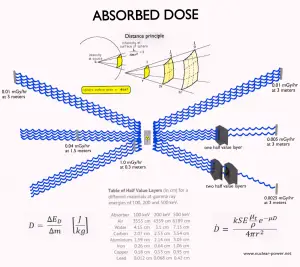
  • Distance. The amount of radiation exposure depends on the distance from the source of radiation. Similarly to a heat from a fire, if you are too close, the intensity of heat radiation is high and you can get burned. If you are at the right distance, you can withstand there without any problems and moreover it is comfortable. If you are too far from heat source, the insufficiency of heat can also hurt you. This analogy, in a certain sense, can be applied to radiation also from radiation sources.
  • Time. The amount of radiation exposure depends directly (linearly) on the time people spend near the source of radiation.
  • Shielding. Finally, the radiation dose also depends on the material between the source and the object. If the source is too intensive and time or distance do not provide sufficient radiation protection, the shielding can be used.

The danger of ionizing radiation lies in the fact that the radiation is invisible and not directly detectable by human senses. People can neither see nor feel radiation, yet it deposits energy to the molecules of the body. The energy is transferred in small quantities for each interaction between the radiation and a molecule and there are usually many such interactions.

In nuclear power plants the central problem is to protect personal and the environment against gamma rays and neutrons, because the ranges of charged particles (such as beta particles and alpha particles) in matter are very short. On the other hand we must deal with shielding of all types of radiation, because each nuclear reactor is a significant source of all types of ionizing radiation.

See also: Gamma Ray Attenuation

See also: Neutron Shielding


Gray – Unit of Absorbed Dose

A dose of one gray is equivalent to a unit of energy (joule) deposited in a kilogram of a substance. This unit was named in honour of Louis Harold Gray, who was one of the great pioneers in radiation biology. One gray is a large amount of absorbed dose. A person who has absorbed a whole body dose of 1 Gy has absorbed one joule of energy in each kg of body tissue.

Absorbed doses measured in industry (except nuclear medicine) often have usually lower doses than one gray, and the following multiples are often used:

1 mGy (milligray) = 1E-3 Gy

1 µGy (microgray) = 1E-6 Gy

Conversions from the SI units to other units are as follows:

  • 1 Gy = 100 rad
  • 1 mGy = 100 mrad

The gray and rad are physical units. They describe the physical effect of the incident radiation (i.e., the amount of energy deposited per kg), but it tells us nothing about the biological consequences of such energy deposition in living tissue.

Absorbed Dose Rate

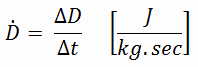
The absorbed dose rate is the rate at which an absorbed dose is received. It is a measure of radiation dose intensity (or strength). The absorbed dose rate is therefore defined as:
absorbed dose rate - definition

In conventional units, it is measured in mrad/sec, rad/hr, mGy/sec or Gy/hr. Since the amount of radiation exposure depends directly (linearly) on the time people spend near the source of radiation, the absorbed dose is equal to the strength of the radiation field (dose rate) multiplied by the length of time spent in that field. The example above indicates a person could expect to receive a dose of 25 millirems by staying in a 50 millirems/hour field for thirty minutes.

Examples of Absorbed Doses in grays

We must note that radiation is all around us. In, around, and above the world we live in. It is a natural energy force that surrounds us. It is a part of our natural world that has been here since the birth of our planet. In the following points we try to express enormous ranges of radiation exposure, which can be obtained from various sources.

  • 0.05 µGy – Sleeping next to someone
  • 0.09 µGy – Living within 30 miles of a nuclear power plant for a year
  • 0.1 µGy – Eating one banana
  • 0.3 µGy – Living within 50 miles of a coal power plant for a year
  • 10 µGy – Average daily dose received from natural background
  • 20 µGy – Chest X-ray
  • 40 µGy – A 5-hour airplane flight
  • 600 µGy – mammogram
  • 1 000 µGy – Dose limit for individual members of the public, total effective dose per annum
  • 3 650 µGy – Average yearly dose received from natural background
  • 5 800 µGy – Chest CT scan
  • 10 000 µGy – Average yearly dose received from natural background in Ramsar, Iran
  • 20 000 µGy – single full-body CT scan
  • 175 000 µGy – Annual dose from natural radiation on a monazite beach near Guarapari, Brazil.
  • 5 000 000 µGy – Dose that kills a human with a 50% risk within 30 days (LD50/30), if the dose is received over a very short duration.

As can be seen, low-level doses are common for everyday life. The previous examples can help illustrate relative magnitudes. From biological consequences point of view, it is very important to distinguish between doses received over short and extended periods.  An “acute dose” is one that occurs over a short and finite period of time, while a “chronic dose” is a dose that continues for an extended period of time so that it is better described by a dose rate. High doses tend to kill cells, while low doses tend to damage or change them. Low doses spread out over long periods of time don’t cause an immediate problem to any body organ. The effects of low doses of radiation occur at the level of the cell, and the results may not be observed for many years.

Calculation of Shielded Dose Rate

Assume the point isotropic source which contains 1.0 Ci of 137Cs, which has a half-life of 30.2 years. Note that the relationship between half-life and the amount of a radionuclide required to give an activity of one curie is shown below. This amount of material can be calculated using λ, which is the decay constant of certain nuclide:

Curie - Unit of Activity

About 94.6 percent decays by beta emission to a metastable nuclear isomer of barium: barium-137m. The main photon peak of Ba-137m is 662 keV. For this calculation, assume that all decays go through this channel.

Determine the primary photon dose rate, in gray per hour (Gy.h-1), at the outer surface of a 5 cm thick lead shield. Primary photon dose rate neglects all secondary particles. Assume that the effective distance of the source from the dose point is 10 cm. We shall also assume that the dose point is soft tissue and it can reasonably be simulated by water and we use the mass energy absorption coefficient for water.

See also: Gamma Ray Attenuation

See also: Shielding of Gamma Rays

Solution:

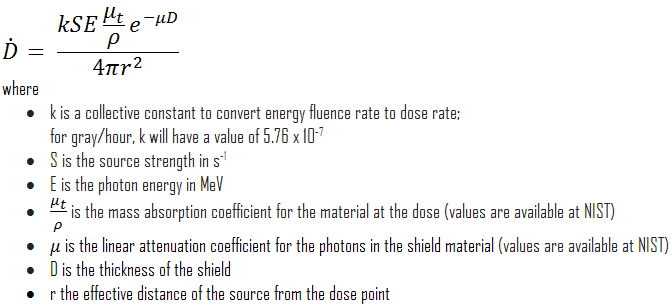
The primary photon dose rate is attenuated exponentially, and the dose rate from primary photons, taking account of the shield, is given by:
dose rate calculation

As can be seen, we do not account for the buildup of secondary radiation. If secondary particles are produced or if the primary radiation changes its energy or direction, then the effective attenuation will be much less.  This assumption generally underestimates the true dose rate, especially for thick shields and when the dose point is close to the shield surface, but this assumption simplifies all calculations. For this case the true dose rate (with the buildup of secondary radiation) will be more than two times higher.

To calculate the absorbed dose rate, we have to use in the formula:

  • k = 5.76 x 10⁻⁷
  • S = 3.7 x 10¹⁰ s-1
  • E = 0.662 MeV
  • μt/ρ =  0.0326 cm2/g (values are available at NIST)
  • μ =  1.289 cm-1 (values are available at NIST)
  • D = 5 cm
  • r = 10 cm

Result:

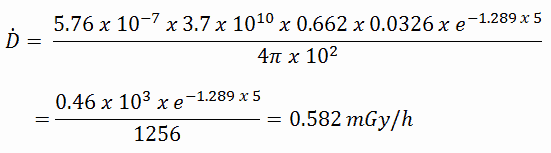
The resulting absorbed dose rate in grays per hour is then:
absorbed dose rate - gray - calculation

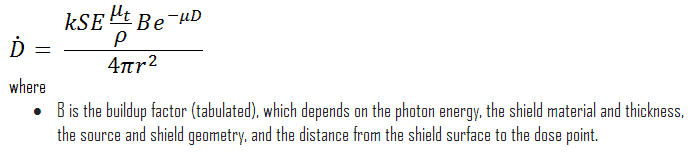
If we want to account for the buildup of secondary radiation, then we have to include the buildup factor. The extended formula for the dose rate is then:
absorbed dose rate - gray

From Absorbed Dose to Equivalent Dose

As was written, each type of radiation interacts with matter in a different way. For example charged particles with high energies can directly ionize atoms. On the other hand electrically neutral particles interacts only indirectly, but can also transfer some or all of their energies to the matter. It would certainly simplify matters if biological effects of radiation were directly proportional to the absorbed dose. Unfortunately, biological effects depend also on the way in which the absorbed dose is distributed along the path of the radiation. Studies have shown that alpha and neutron radiation cause greater biological damage for a given energy deposition per kg of tissue than gamma radiation does. It was discovered, biological effects of any radiation increases with the linear energy transfer (LET). In short, the biological damage from high-LET radiation (alpha particles, protons or neutrons) is much greater than that from low-LET radiation (gamma rays). This is because the living tissue can more easily repair damage from radiation that is spread over a large area than that which is concentrated in a small area. Because more biological damage is caused for the same physical dose (i.e., the same energy deposited per unit mass of tissue), one gray of alpha or neutron radiation is more harmful than one gray of gamma radiation. This fact that radiations of different types (and energies) give different biological effects for the same absorbed dose is described in terms of factors known as the relative biological effectiveness (RBE) and the radiation weighting factor (wR).

——–
References:

Radiation Protection:

  1. Knoll, Glenn F., Radiation Detection and Measurement 4th Edition, Wiley, 8/2010. ISBN-13: 978-0470131480.
  2. Stabin, Michael G., Radiation Protection and Dosimetry: An Introduction to Health Physics, Springer, 10/2010. ISBN-13: 978-1441923912.
  3. Martin, James E., Physics for Radiation Protection 3rd Edition, Wiley-VCH, 4/2013. ISBN-13: 978-3527411764.
  4. U.S.NRC, NUCLEAR REACTOR CONCEPTS
  5. U.S. Department of Energy, Nuclear Physics and Reactor Theory. DOE Fundamentals Handbook, Volume 1 and 2. January 1993.

Nuclear and Reactor Physics:

  1. J. R. Lamarsh, Introduction to Nuclear Reactor Theory, 2nd ed., Addison-Wesley, Reading, MA (1983).
  2. J. R. Lamarsh, A. J. Baratta, Introduction to Nuclear Engineering, 3d ed., Prentice-Hall, 2001, ISBN: 0-201-82498-1.
  3. W. M. Stacey, Nuclear Reactor Physics, John Wiley & Sons, 2001, ISBN: 0- 471-39127-1.
  4. Glasstone, Sesonske. Nuclear Reactor Engineering: Reactor Systems Engineering, Springer; 4th edition, 1994, ISBN: 978-0412985317
  5. W.S.C. Williams. Nuclear and Particle Physics. Clarendon Press; 1 edition, 1991, ISBN: 978-0198520467
  6. G.R.Keepin. Physics of Nuclear Kinetics. Addison-Wesley Pub. Co; 1st edition, 1965
  7. Robert Reed Burn, Introduction to Nuclear Reactor Operation, 1988.
  8. U.S. Department of Energy, Nuclear Physics and Reactor Theory. DOE Fundamentals Handbook, Volume 1 and 2. January 1993.
  9. Paul Reuss, Neutron Physics. EDP Sciences, 2008. ISBN: 978-2759800414.

See also:

Radiation Protection

We hope, this article, Absorbed Dose, helps you. If so, give us a like in the sidebar. Main purpose of this website is to help the public to learn some interesting and important information about radiation and dosimeters.

What is Unit of Absorbed Dose – Definition

Units of Absorbed Dose. The absorbed dose is usually measured in a unit called the gray (Gy), which is derived from the SI system. The non-SI unit rad is sometimes also used, predominantly in the USA. Radiation Dosimetry

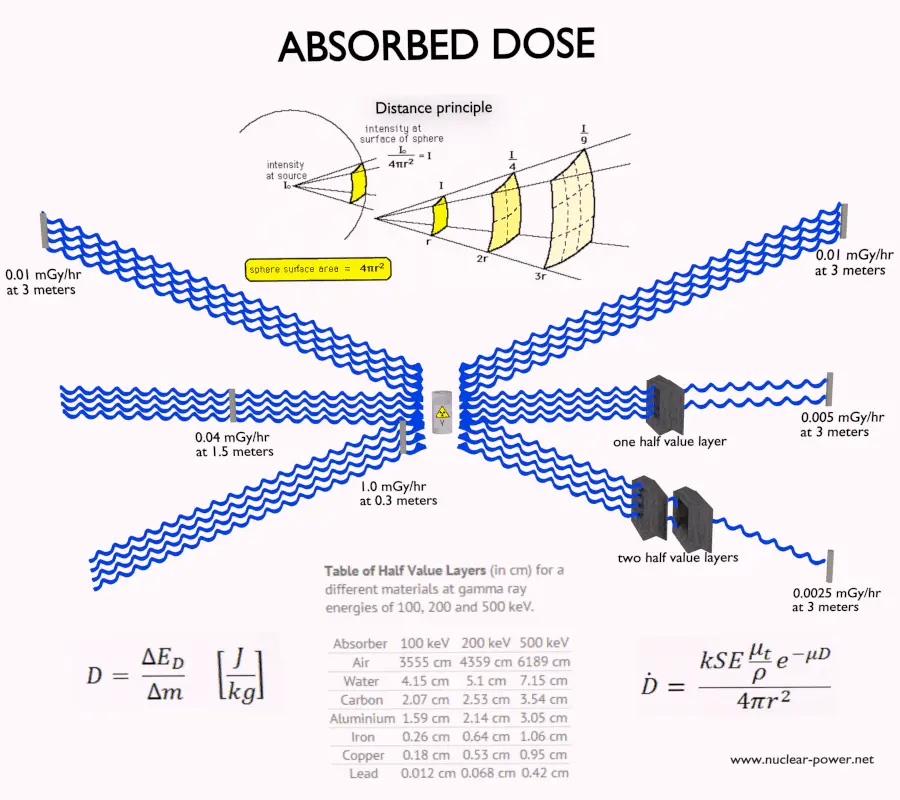
Absorbed dose is defined as the amount of energy deposited by ionizing radiation in a substance. Absorbed dose is given the symbol D. The absorbed dose is usually measured in a unit called the gray (Gy), which is derived from the SI system. The non-SI unit rad is sometimes also used, predominantly in the USA.

absorbed dose - definition

Units of Absorbed Dose

  • Gray. A dose of one gray is equivalent to a unit of energy (joule) deposited in a kilogram of a substance.
  • RAD. A dose of one rad is equivalent to the deposition of one hundred ergs of energy in one gram of any material.

Gray – Unit of Absorbed Dose

gray unitA dose of one gray is equivalent to a unit of energy (joule) deposited in a kilogram of a substance. This unit was named in honour of Louis Harold Gray, who was one of the great pioneers in radiation biology. One gray is a large amount of absorbed dose. A person who has absorbed a whole body dose of 1 Gy has absorbed one joule of energy in each kg of body tissue.

Absorbed doses measured in industry (except nuclear medicine) often have usually lower doses than one gray, and the following multiples are often used:

1 mGy (milligray) = 1E-3 Gy

1 µGy (microgray) = 1E-6 Gy

Conversions from the SI units to other units are as follows:

  • 1 Gy = 100 rad
  • 1 mGy = 100 mrad

The gray and rad are physical units. They describe the physical effect of the incident radiation (i.e., the amount of energy deposited per kg), but it tells us nothing about the biological consequences of such energy deposition in living tissue.

rad – Unit of Absorbed Dose

A dose of one rad is equivalent to the deposition of one hundred ergs of energy in one gram of any material. Note that, the erg is a unit of energy and work equal to 10−7 joules. A related unit, the roentgen, is used to quantify the radiation exposure. The F-factor can be used to convert between rads and roentgens.

One rad is significantly lower dose than one gray, which is a large amount of absorbed dose. A person who has absorbed a whole body dose of 100 rad has absorbed one joule of energy in each kg of body tissue. Absorbed doses measured in industry (except nuclear medicine) often have comparable doses to one rad and the following multiples are often used:

1 mrad (millirad) = 1E-3 rad

1 krad (kilorad) = 1E3 rad

Conversions from the SI units to other units are as follows:

  • 1 Gy = 100 rad
  • 1 mGy = 100 mrad

The gray and rad are physical units. They describe the physical effect of the incident radiation (i.e., the amount of energy deposited per kg), but it tells us nothing about the biological consequences of such energy deposition in living tissue.

References:

Radiation Protection:

  1. Knoll, Glenn F., Radiation Detection and Measurement 4th Edition, Wiley, 8/2010. ISBN-13: 978-0470131480.
  2. Stabin, Michael G., Radiation Protection and Dosimetry: An Introduction to Health Physics, Springer, 10/2010. ISBN-13: 978-1441923912.
  3. Martin, James E., Physics for Radiation Protection 3rd Edition, Wiley-VCH, 4/2013. ISBN-13: 978-3527411764.
  4. U.S.NRC, NUCLEAR REACTOR CONCEPTS
  5. U.S. Department of Energy, Nuclear Physics and Reactor Theory. DOE Fundamentals Handbook, Volume 1 and 2. January 1993.

Nuclear and Reactor Physics:

  1. J. R. Lamarsh, Introduction to Nuclear Reactor Theory, 2nd ed., Addison-Wesley, Reading, MA (1983).
  2. J. R. Lamarsh, A. J. Baratta, Introduction to Nuclear Engineering, 3d ed., Prentice-Hall, 2001, ISBN: 0-201-82498-1.
  3. W. M. Stacey, Nuclear Reactor Physics, John Wiley & Sons, 2001, ISBN: 0- 471-39127-1.
  4. Glasstone, Sesonske. Nuclear Reactor Engineering: Reactor Systems Engineering, Springer; 4th edition, 1994, ISBN: 978-0412985317
  5. W.S.C. Williams. Nuclear and Particle Physics. Clarendon Press; 1 edition, 1991, ISBN: 978-0198520467
  6. G.R.Keepin. Physics of Nuclear Kinetics. Addison-Wesley Pub. Co; 1st edition, 1965
  7. Robert Reed Burn, Introduction to Nuclear Reactor Operation, 1988.
  8. U.S. Department of Energy, Nuclear Physics and Reactor Theory. DOE Fundamentals Handbook, Volume 1 and 2. January 1993.
  9. Paul Reuss, Neutron Physics. EDP Sciences, 2008. ISBN: 978-2759800414.

See also:

Absorbed Dose

We hope, this article, Unit of Absorbed Dose, helps you. If so, give us a like in the sidebar. Main purpose of this website is to help the public to learn some interesting and important information about radiation and dosimeters.

What is Example of Absorbed Dose – Ranges – Definition

Examples of Absorbed Dose – Ranges. The previous examples can help illustrate relative magnitudes. From biological consequences point of view, it is very important to distinguish between doses received over short and extended periods. Radiation Dosimetry

Absorbed dose is defined as the amount of energy deposited by ionizing radiation in a substance. Absorbed dose is given the symbol D. The absorbed dose is usually measured in a unit called the gray (Gy), which is derived from the SI system. The non-SI unit rad is sometimes also used, predominantly in the USA.

absorbed dose - definition

Examples of Absorbed Doses in grays

We must note that radiation is all around us. In, around, and above the world we live in. It is a natural energy force that surrounds us. It is a part of our natural world that has been here since the birth of our planet. In the following points we try to express enormous ranges of radiation exposure, which can be obtained from various sources.

  • 0.05 µGy – Sleeping next to someone
  • 0.09 µGy – Living within 30 miles of a nuclear power plant for a year
  • 0.1 µGy – Eating one banana
  • 0.3 µGy – Living within 50 miles of a coal power plant for a year
  • 10 µGy – Average daily dose received from natural background
  • 20 µGy – Chest X-ray
  • 40 µGy – A 5-hour airplane flight
  • 600 µGy – mammogram
  • 1 000 µGy – Dose limit for individual members of the public, total effective dose per annum
  • 3 650 µGy – Average yearly dose received from natural background
  • 5 800 µGy – Chest CT scan
  • 10 000 µGy – Average yearly dose received from natural background in Ramsar, Iran
  • 20 000 µGy – single full-body CT scan
  • 175 000 µGy – Annual dose from natural radiation on a monazite beach near Guarapari, Brazil.
  • 5 000 000 µGy – Dose that kills a human with a 50% risk within 30 days (LD50/30), if the dose is received over a very short duration.

As can be seen, low-level doses are common for everyday life. The previous examples can help illustrate relative magnitudes. From biological consequences point of view, it is very important to distinguish between doses received over short and extended periods. An “acute dose” is one that occurs over a short and finite period of time, while a “chronic dose” is a dose that continues for an extended period of time so that it is better described by a dose rate. High doses tend to kill cells, while low doses tend to damage or change them. Low doses spread out over long periods of time don’t cause an immediate problem to any body organ. The effects of low doses of radiation occur at the level of the cell, and the results may not be observed for many years.

References:

Radiation Protection:

  1. Knoll, Glenn F., Radiation Detection and Measurement 4th Edition, Wiley, 8/2010. ISBN-13: 978-0470131480.
  2. Stabin, Michael G., Radiation Protection and Dosimetry: An Introduction to Health Physics, Springer, 10/2010. ISBN-13: 978-1441923912.
  3. Martin, James E., Physics for Radiation Protection 3rd Edition, Wiley-VCH, 4/2013. ISBN-13: 978-3527411764.
  4. U.S.NRC, NUCLEAR REACTOR CONCEPTS
  5. U.S. Department of Energy, Nuclear Physics and Reactor Theory. DOE Fundamentals Handbook, Volume 1 and 2. January 1993.

Nuclear and Reactor Physics:

  1. J. R. Lamarsh, Introduction to Nuclear Reactor Theory, 2nd ed., Addison-Wesley, Reading, MA (1983).
  2. J. R. Lamarsh, A. J. Baratta, Introduction to Nuclear Engineering, 3d ed., Prentice-Hall, 2001, ISBN: 0-201-82498-1.
  3. W. M. Stacey, Nuclear Reactor Physics, John Wiley & Sons, 2001, ISBN: 0- 471-39127-1.
  4. Glasstone, Sesonske. Nuclear Reactor Engineering: Reactor Systems Engineering, Springer; 4th edition, 1994, ISBN: 978-0412985317
  5. W.S.C. Williams. Nuclear and Particle Physics. Clarendon Press; 1 edition, 1991, ISBN: 978-0198520467
  6. G.R.Keepin. Physics of Nuclear Kinetics. Addison-Wesley Pub. Co; 1st edition, 1965
  7. Robert Reed Burn, Introduction to Nuclear Reactor Operation, 1988.
  8. U.S. Department of Energy, Nuclear Physics and Reactor Theory. DOE Fundamentals Handbook, Volume 1 and 2. January 1993.
  9. Paul Reuss, Neutron Physics. EDP Sciences, 2008. ISBN: 978-2759800414.

See also:

Absorbed Dose

We hope, this article, Example of Absorbed Dose – Ranges, helps you. If so, give us a like in the sidebar. Main purpose of this website is to help the public to learn some interesting and important information about radiation and dosimeters.

What is Calculation of Absorbed Dose – Problem – Definition

Calculation of Absorbed Dose – Problem. Calculate the primary photon dose rate, in gray per hour (Gy.h-1), at the outer surface of a 5 cm thick lead shield. Radiation Dosimetry

Absorbed dose is defined as the amount of energy deposited by ionizing radiation in a substance. Absorbed dose is given the symbol D. The absorbed dose is usually measured in a unit called the gray (Gy), which is derived from the SI system. The non-SI unit rad is sometimes also used, predominantly in the USA.

absorbed dose - definition

Absorbed dose

Calculation of Shielded Dose Rate

Assume the point isotropic source which contains 1.0 Ci of 137Cs, which has a half-life of 30.2 years. Note that the relationship between half-life and the amount of a radionuclide required to give an activity of one curie is shown below. This amount of material can be calculated using λ, which is the decay constant of certain nuclide:

Curie - Unit of Activity

About 94.6 percent decays by beta emission to a metastable nuclear isomer of barium: barium-137m. The main photon peak of Ba-137m is 662 keV. For this calculation, assume that all decays go through this channel.

Determine the primary photon dose rate, in gray per hour (Gy.h-1), at the outer surface of a 5 cm thick lead shield. Primary photon dose rate neglects all secondary particles. Assume that the effective distance of the source from the dose point is 10 cm. We shall also assume that the dose point is soft tissue and it can reasonably be simulated by water and we use the mass energy absorption coefficient for water.

See also: Gamma Ray Attenuation

See also: Shielding of Gamma Rays

Solution:

The primary photon dose rate is attenuated exponentially, and the dose rate from primary photons, taking account of the shield, is given by:

dose rate calculation

As can be seen, we do not account for the buildup of secondary radiation. If secondary particles are produced or if the primary radiation changes its energy or direction, then the effective attenuation will be much less. This assumption generally underestimates the true dose rate, especially for thick shields and when the dose point is close to the shield surface, but this assumption simplifies all calculations. For this case the true dose rate (with the buildup of secondary radiation) will be more than two times higher.

To calculate the absorbed dose rate, we have to use in the formula:

  • k = 5.76 x 10⁻⁷
  • S = 3.7 x 10¹⁰ s-1
  • E = 0.662 MeV
  • μt/ρ = 0.0326 cm2/g (values are available at NIST)
  • μ = 1.289 cm-1 (values are available at NIST)
  • D = 5 cm
  • r = 10 cm

Result:

The resulting absorbed dose rate in grays per hour is then:

absorbed dose rate - gray - calculation

If we want to account for the buildup of secondary radiation, then we have to include the buildup factor. The extended formula for the dose rate is then:

absorbed dose rate - gray


References:

Radiation Protection:

  1. Knoll, Glenn F., Radiation Detection and Measurement 4th Edition, Wiley, 8/2010. ISBN-13: 978-0470131480.
  2. Stabin, Michael G., Radiation Protection and Dosimetry: An Introduction to Health Physics, Springer, 10/2010. ISBN-13: 978-1441923912.
  3. Martin, James E., Physics for Radiation Protection 3rd Edition, Wiley-VCH, 4/2013. ISBN-13: 978-3527411764.
  4. U.S.NRC, NUCLEAR REACTOR CONCEPTS
  5. U.S. Department of Energy, Nuclear Physics and Reactor Theory. DOE Fundamentals Handbook, Volume 1 and 2. January 1993.

Nuclear and Reactor Physics:

  1. J. R. Lamarsh, Introduction to Nuclear Reactor Theory, 2nd ed., Addison-Wesley, Reading, MA (1983).
  2. J. R. Lamarsh, A. J. Baratta, Introduction to Nuclear Engineering, 3d ed., Prentice-Hall, 2001, ISBN: 0-201-82498-1.
  3. W. M. Stacey, Nuclear Reactor Physics, John Wiley & Sons, 2001, ISBN: 0- 471-39127-1.
  4. Glasstone, Sesonske. Nuclear Reactor Engineering: Reactor Systems Engineering, Springer; 4th edition, 1994, ISBN: 978-0412985317
  5. W.S.C. Williams. Nuclear and Particle Physics. Clarendon Press; 1 edition, 1991, ISBN: 978-0198520467
  6. G.R.Keepin. Physics of Nuclear Kinetics. Addison-Wesley Pub. Co; 1st edition, 1965
  7. Robert Reed Burn, Introduction to Nuclear Reactor Operation, 1988.
  8. U.S. Department of Energy, Nuclear Physics and Reactor Theory. DOE Fundamentals Handbook, Volume 1 and 2. January 1993.
  9. Paul Reuss, Neutron Physics. EDP Sciences, 2008. ISBN: 978-2759800414.

See also:

Absorbed Dose

We hope, this article, Calculation of Absorbed Dose – Problem, helps you. If so, give us a like in the sidebar. Main purpose of this website is to help the public to learn some interesting and important information about radiation and dosimeters.

What is Gray – Unit of Radiation Dose – Definition

A dose of one gray is equivalent to a unit of energy (joule) deposited in a kilogram of a substance. This unit was named in honour of Louis Harold Gray. Gray – Unit of Radiation Dose

Absorbed dose is defined as the amount of energy deposited by ionizing radiation in a substance. Absorbed dose is given the symbol D. The absorbed dose is usually measured in a unit called the gray (Gy), which is derived from the SI system. The non-SI unit rad is sometimes also used, predominantly in the USA.

absorbed dose - definition

Units of absorbed dose:

  • Gray. A dose of one gray is equivalent to a unit of energy (joule) deposited in a kilogram of a substance.
  • RAD. A dose of one rad is equivalent to the deposition of one hundred ergs of energy in one gram of any material.

Gray – Unit of Absorbed Dose

gray unitA dose of one gray is equivalent to a unit of energy (joule) deposited in a kilogram of a substance. This unit was named in honour of Louis Harold Gray, who was one of the great pioneers in radiation biology. One gray is a large amount of absorbed dose. A person who has absorbed a whole body dose of 1 Gy has absorbed one joule of energy in each kg of body tissue.

Absorbed doses measured in industry (except nuclear medicine) often have usually lower doses than one gray, and the following multiples are often used:

1 mGy (milligray) = 1E-3 Gy

1 µGy (microgray) = 1E-6 Gy

Conversions from the SI units to other units are as follows:

  • 1 Gy = 100 rad
  • 1 mGy = 100 mrad

The gray and rad are physical units. They describe the physical effect of the incident radiation (i.e., the amount of energy deposited per kg), but it tells us nothing about the biological consequences of such energy deposition in living tissue.

Examples of Absorbed Doses in grays

We must note that radiation is all around us. In, around, and above the world we live in. It is a natural energy force that surrounds us. It is a part of our natural world that has been here since the birth of our planet. In the following points we try to express enormous ranges of radiation exposure, which can be obtained from various sources.

  • 0.05 µGy – Sleeping next to someone
  • 0.09 µGy – Living within 30 miles of a nuclear power plant for a year
  • 0.1 µGy – Eating one banana
  • 0.3 µGy – Living within 50 miles of a coal power plant for a year
  • 10 µGy – Average daily dose received from natural background
  • 20 µGy – Chest X-ray
  • 40 µGy – A 5-hour airplane flight
  • 600 µGy – mammogram
  • 1 000 µGy – Dose limit for individual members of the public, total effective dose per annum
  • 3 650 µGy – Average yearly dose received from natural background
  • 5 800 µGy – Chest CT scan
  • 10 000 µGy – Average yearly dose received from natural background in Ramsar, Iran
  • 20 000 µGy – single full-body CT scan
  • 175 000 µGy – Annual dose from natural radiation on a monazite beach near Guarapari, Brazil.
  • 5 000 000 µGy – Dose that kills a human with a 50% risk within 30 days (LD50/30), if the dose is received over a very short duration.

As can be seen, low-level doses are common for everyday life. The previous examples can help illustrate relative magnitudes. From biological consequences point of view, it is very important to distinguish between doses received over short and extended periods. An “acute dose” is one that occurs over a short and finite period of time, while a “chronic dose” is a dose that continues for an extended period of time so that it is better described by a dose rate. High doses tend to kill cells, while low doses tend to damage or change them. Low doses spread out over long periods of time don’t cause an immediate problem to any body organ. The effects of low doses of radiation occur at the level of the cell, and the results may not be observed for many years.

Calculation of Shielded Dose Rate in grays

Assume the point isotropic source which contains 1.0 Ci of 137Cs, which has a half-life of 30.2 years. Note that the relationship between half-life and the amount of a radionuclide required to give an activity of one curie is shown below. This amount of material can be calculated using λ, which is the decay constant of certain nuclide:

Curie - Unit of Activity

About 94.6 percent decays by beta emission to a metastable nuclear isomer of barium: barium-137m. The main photon peak of Ba-137m is 662 keV. For this calculation, assume that all decays go through this channel.

Calculate the primary photon dose rate, in gray per hour (Gy.h-1), at the outer surface of a 5 cm thick lead shield. Primary photon dose rate neglects all secondary particles. Assume that the effective distance of the source from the dose point is 10 cm. We shall also assume that the dose point is soft tissue and it can reasonably be simulated by water and we use the mass energy absorption coefficient for water.

See also: Gamma Ray Attenuation

See also: Shielding of Gamma Rays

Solution:

The primary photon dose rate is attenuated exponentially, and the dose rate from primary photons, taking account of the shield, is given by:

dose rate calculation

As can be seen, we do not account for the buildup of secondary radiation. If secondary particles are produced or if the primary radiation changes its energy or direction, then the effective attenuation will be much less. This assumption generally underestimates the true dose rate, especially for thick shields and when the dose point is close to the shield surface, but this assumption simplifies all calculations. For this case the true dose rate (with the buildup of secondary radiation) will be more than two times higher.

To calculate the absorbed dose rate, we have to use in the formula:

  • k = 5.76 x 10⁻⁷
  • S = 3.7 x 10¹⁰ s-1
  • E = 0.662 MeV
  • μt/ρ = 0.0326 cm2/g (values are available at NIST)
  • μ = 1.289 cm-1 (values are available at NIST)
  • D = 5 cm
  • r = 10 cm

Result:

The resulting absorbed dose rate in grays per hour is then:

absorbed dose rate - gray - calculation

If we want to account for the buildup of secondary radiation, then we have to include the buildup factor. The extended formula for the dose rate is then:

absorbed dose rate - gray

References:

Radiation Protection:

  1. Knoll, Glenn F., Radiation Detection and Measurement 4th Edition, Wiley, 8/2010. ISBN-13: 978-0470131480.
  2. Stabin, Michael G., Radiation Protection and Dosimetry: An Introduction to Health Physics, Springer, 10/2010. ISBN-13: 978-1441923912.
  3. Martin, James E., Physics for Radiation Protection 3rd Edition, Wiley-VCH, 4/2013. ISBN-13: 978-3527411764.
  4. U.S.NRC, NUCLEAR REACTOR CONCEPTS
  5. U.S. Department of Energy, Nuclear Physics and Reactor Theory. DOE Fundamentals Handbook, Volume 1 and 2. January 1993.

Nuclear and Reactor Physics:

  1. J. R. Lamarsh, Introduction to Nuclear Reactor Theory, 2nd ed., Addison-Wesley, Reading, MA (1983).
  2. J. R. Lamarsh, A. J. Baratta, Introduction to Nuclear Engineering, 3d ed., Prentice-Hall, 2001, ISBN: 0-201-82498-1.
  3. W. M. Stacey, Nuclear Reactor Physics, John Wiley & Sons, 2001, ISBN: 0- 471-39127-1.
  4. Glasstone, Sesonske. Nuclear Reactor Engineering: Reactor Systems Engineering, Springer; 4th edition, 1994, ISBN: 978-0412985317
  5. W.S.C. Williams. Nuclear and Particle Physics. Clarendon Press; 1 edition, 1991, ISBN: 978-0198520467
  6. G.R.Keepin. Physics of Nuclear Kinetics. Addison-Wesley Pub. Co; 1st edition, 1965
  7. Robert Reed Burn, Introduction to Nuclear Reactor Operation, 1988.
  8. U.S. Department of Energy, Nuclear Physics and Reactor Theory. DOE Fundamentals Handbook, Volume 1 and 2. January 1993.
  9. Paul Reuss, Neutron Physics. EDP Sciences, 2008. ISBN: 978-2759800414.

See also:

Absorbed Dose

We hope, this article, Gray – Unit of Radiation Dose, helps you. If so, give us a like in the sidebar. Main purpose of this website is to help the public to learn some interesting and important information about radiation and dosimeters.

What is Radiation Exposure – Definition

Radiation exposure is a measure of the ionization of air due to ionizing radiation from high-energy photons (i.e. X-rays and gamma rays). Radiation exposure is given the symbol X. Radiation Dosimetry

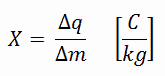
Radiation exposure is a measure of the ionization of air due to ionizing radiation from high-energy photons (i.e. X-rays and gamma rays). Radiation exposure is defined as the sum of electrical charges (∆q) on all the ions of one sign produced in air when all the electrons, liberated by photons in a volume of air whose mass is ∆m, are completely stopped in air.

radiation exposure - definition

Radiation exposure is given the symbol X. The SI unit of radiation exposure is the coulomb per kilogram (C/kg), but in practice, the roentgen is used.

Unit of Radiation Exposure

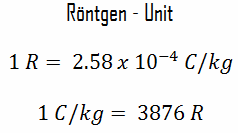
The roentgen, abbreviated R, is the unit of radiation exposure. In the original definition 1 R means the amount of X-rays or γ-radiation that is required to liberate positive and negative charges of one electrostatic unit of charge (esu) in 1 cm³ of dry air at standard temperature and pressure (STP). Note that, 1 esu ≈ 3.33564×10⁻¹⁰ C. As a result, one roentgen corresponds to 2.58 x 10⁻⁴ coulomb per kg of ions generated in air and an exposure of one coulomb per kilogram is equivalent to 3876 roentgens.

roentgen - unit of exposure - definition

Radiation exposures measured in industry (except nuclear medicine) often have comparable doses to one roentgen and the following multiples are often used:

1 mR (milli roentgen) = 1E-3 R

1 kR (kilo roentgen) = 1E3 R

To calculate the radiation dose (in Gy) from a radiation exposure of 1 R depends on the energy of the X-rays or γ-rays and the composition of the irradiated material. For example, if soft tissue is exposed to γ-rays of 1 R, the radiation dose will be approximately 9.3 milligray (mGy).

Conversion: Exposure to Absorbed Dose

Dose is defined as the amount of energy deposited by ionizing radiation in a substance. For a given radiation field, the absorbed dose will depend on the type of matter which absorbs the radiation. Although a large number of possible interactions are known, there are three key interaction mechanisms of gamma rays with matter.

For instance, for an exposure of 1 roentgen by gamma rays with an energy of 1 MeV, the dose in air will be 0.876 rad. This can be determined using the ionization energy of dry air at 20 °C and 101.325 kPa of pressure, which is 33.97 J/C. Therefore, an exposure of 2.58×10⁻⁴ C/kg (1 roentgen) would deposit an absorbed dose of 8.76×10⁻³ J/kg (0.876 rad) in dry air at those conditions. A table giving the exposure to dose conversion for various materials for a variety of gamma ray energies can be found in literature.

Radiation Exposure Rate

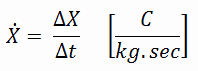
The radiation exposure rate is the rate at which an exposure is received. It is a measure of exposure intensity (or strength). The exposure rate is therefore defined as:

radiation exposure rate - definition

In conventional units, it is measured in mR/sec or R/hr. Since the amount of radiation exposure depends directly (linearly) on the time people spend near the source of radiation, the exposure is equal to the strength of the radiation field (exposure rate) multiplied by the length of time spent in that field. It must be emphasized that this concept applies only to X-rays or γ-rays in air at a point outside a body. Radiation exposure is not applicable to describe neutrons, charged particles or all interactions taking place within a body.

References:

Radiation Protection:

  1. Knoll, Glenn F., Radiation Detection and Measurement 4th Edition, Wiley, 8/2010. ISBN-13: 978-0470131480.
  2. Stabin, Michael G., Radiation Protection and Dosimetry: An Introduction to Health Physics, Springer, 10/2010. ISBN-13: 978-1441923912.
  3. Martin, James E., Physics for Radiation Protection 3rd Edition, Wiley-VCH, 4/2013. ISBN-13: 978-3527411764.
  4. U.S.NRC, NUCLEAR REACTOR CONCEPTS
  5. U.S. Department of Energy, Nuclear Physics and Reactor Theory. DOE Fundamentals Handbook, Volume 1 and 2. January 1993.

Nuclear and Reactor Physics:

  1. J. R. Lamarsh, Introduction to Nuclear Reactor Theory, 2nd ed., Addison-Wesley, Reading, MA (1983).
  2. J. R. Lamarsh, A. J. Baratta, Introduction to Nuclear Engineering, 3d ed., Prentice-Hall, 2001, ISBN: 0-201-82498-1.
  3. W. M. Stacey, Nuclear Reactor Physics, John Wiley & Sons, 2001, ISBN: 0- 471-39127-1.
  4. Glasstone, Sesonske. Nuclear Reactor Engineering: Reactor Systems Engineering, Springer; 4th edition, 1994, ISBN: 978-0412985317
  5. W.S.C. Williams. Nuclear and Particle Physics. Clarendon Press; 1 edition, 1991, ISBN: 978-0198520467
  6. G.R.Keepin. Physics of Nuclear Kinetics. Addison-Wesley Pub. Co; 1st edition, 1965
  7. Robert Reed Burn, Introduction to Nuclear Reactor Operation, 1988.
  8. U.S. Department of Energy, Nuclear Physics and Reactor Theory. DOE Fundamentals Handbook, Volume 1 and 2. January 1993.
  9. Paul Reuss, Neutron Physics. EDP Sciences, 2008. ISBN: 978-2759800414.

See also:

Radiation Protection

We hope, this article, Radiation Exposure, helps you. If so, give us a like in the sidebar. Main purpose of this website is to help the public to learn some interesting and important information about radiation and dosimeters.

What is Roentgen – Unit of Exposure – Definition

The roentgen , abbreviated R, is the unit of radiation exposure. One roentgen corresponds to 2.58E-4 coulomb per kg of ions generated in air and an exposure of one coulomb per kilogram is equivalent to 3876 roentgens. Radiation Dosimetry

Radiation exposure is a measure of the ionization of air due to ionizing radiation from high-energy photons (i.e. X-rays and gamma rays). Radiation exposure is defined as the sum of electrical charges (∆q) on all the ions of one sign produced in air when all the electrons, liberated by photons in a volume of air whose mass is ∆m, are completely stopped in air.

radiation exposure - definition

Radiation exposure is given the symbol X. The SI unit of radiation exposure is the coulomb per kilogram (C/kg), but in practice, the roentgen is used.

Roentgen – Unit of Radiation Exposure

The roentgen , abbreviated R, is the unit of radiation exposure. In the original definition 1 R means the amount of X-rays or γ-radiation that is required to liberate positive and negative charges of one electrostatic unit of charge (esu) in 1 cm³ of dry air at standard temperature and pressure (STP). Note that, 1 esu ≈ 3.33564×10⁻¹⁰ C. As a result, one roentgen corresponds to 2.58 x 10⁻⁴ coulomb per kg of ions generated in air and an exposure of one coulomb per kilogram is equivalent to 3876 roentgens.

roentgen - unit of exposure - definition

Radiation exposures measured in industry (except nuclear medicine) often have comparable doses to one roentgen and the following multiples are often used:

1 mR (milli roentgen) = 1E-3 R

1 kR (kilo roentgen) = 1E3 R

To calculate the radiation dose (in Gy) from a radiation exposure of 1 R depends on the energy of the X-rays or γ-rays and the composition of the irradiated material. For example, if soft tissue is exposed to γ-rays of 1 R, the radiation dose will be approximately 9.3 milligray (mGy).

Conversion: Exposure to Absorbed Dose

Dose is defined as the amount of energy deposited by ionizing radiation in a substance. For a given radiation field, the absorbed dose will depend on the type of matter which absorbs the radiation. Although a large number of possible interactions are known, there are three key interaction mechanisms of gamma rays with matter.

For instance, for an exposure of 1 roentgen by gamma rays with an energy of 1 MeV, the dose in air will be 0.876 rad. This can be determined using the ionization energy of dry air at 20 °C and 101.325 kPa of pressure, which is 33.97 J/C. Therefore, an exposure of 2.58×10⁻⁴ C/kg (1 roentgen) would deposit an absorbed dose of 8.76×10⁻³ J/kg (0.876 rad) in dry air at those conditions. A table giving the exposure to dose conversion for various materials for a variety of gamma ray energies can be found in literature.

References:

Radiation Protection:

  1. Knoll, Glenn F., Radiation Detection and Measurement 4th Edition, Wiley, 8/2010. ISBN-13: 978-0470131480.
  2. Stabin, Michael G., Radiation Protection and Dosimetry: An Introduction to Health Physics, Springer, 10/2010. ISBN-13: 978-1441923912.
  3. Martin, James E., Physics for Radiation Protection 3rd Edition, Wiley-VCH, 4/2013. ISBN-13: 978-3527411764.
  4. U.S.NRC, NUCLEAR REACTOR CONCEPTS
  5. U.S. Department of Energy, Nuclear Physics and Reactor Theory. DOE Fundamentals Handbook, Volume 1 and 2. January 1993.

Nuclear and Reactor Physics:

  1. J. R. Lamarsh, Introduction to Nuclear Reactor Theory, 2nd ed., Addison-Wesley, Reading, MA (1983).
  2. J. R. Lamarsh, A. J. Baratta, Introduction to Nuclear Engineering, 3d ed., Prentice-Hall, 2001, ISBN: 0-201-82498-1.
  3. W. M. Stacey, Nuclear Reactor Physics, John Wiley & Sons, 2001, ISBN: 0- 471-39127-1.
  4. Glasstone, Sesonske. Nuclear Reactor Engineering: Reactor Systems Engineering, Springer; 4th edition, 1994, ISBN: 978-0412985317
  5. W.S.C. Williams. Nuclear and Particle Physics. Clarendon Press; 1 edition, 1991, ISBN: 978-0198520467
  6. G.R.Keepin. Physics of Nuclear Kinetics. Addison-Wesley Pub. Co; 1st edition, 1965
  7. Robert Reed Burn, Introduction to Nuclear Reactor Operation, 1988.
  8. U.S. Department of Energy, Nuclear Physics and Reactor Theory. DOE Fundamentals Handbook, Volume 1 and 2. January 1993.
  9. Paul Reuss, Neutron Physics. EDP Sciences, 2008. ISBN: 978-2759800414.

See also:

Exposure

We hope, this article, Roentgen – Unit of Exposure, helps you. If so, give us a like in the sidebar. Main purpose of this website is to help the public to learn some interesting and important information about radiation and dosimeters.

What is Conversion: Exposure to Absorbed Dose – Definition

Conversion: Exposure to Absorbed Dose. For instance, for an exposure of 1 roentgen by gamma rays with an energy of 1 MeV, the dose in air will be 0.876 rad. Radiation Dosimetry

Conversion: Exposure to Absorbed Dose

Dose is defined as the amount of energy deposited by ionizing radiation in a substance. For a given radiation field, the absorbed dose will depend on the type of matter which absorbs the radiation. Although a large number of possible interactions are known, there are three key interaction mechanisms of gamma rays with matter.

For instance, for an exposure of 1 roentgen by gamma rays with an energy of 1 MeV, the dose in air will be 0.876 rad. This can be determined using the ionization energy of dry air at 20 °C and 101.325 kPa of pressure, which is 33.97 J/C. Therefore, an exposure of 2.58×10⁻⁴ C/kg (1 roentgen) would deposit an absorbed dose of 8.76×10⁻³ J/kg (0.876 rad) in dry air at those conditions. A table giving the exposure to dose conversion for various materials for a variety of gamma ray energies can be found in literature.

What is Exposure

Radiation exposure is a measure of the ionization of air due to ionizing radiation from high-energy photons (i.e. X-rays and gamma rays). Radiation exposure is defined as the sum of electrical charges (∆q) on all the ions of one sign produced in air when all the electrons, liberated by photons in a volume of air whose mass is ∆m, are completely stopped in air.

radiation exposure - definition

Radiation exposure is given the symbol X. The SI unit of radiation exposure is the coulomb per kilogram (C/kg), but in practice, the roentgen is used.

What is Absorbed Dose

Absorbed dose is defined as the amount of energy deposited by ionizing radiation in a substance. Absorbed dose is given the symbol D.  The absorbed dose is usually measured in a unit called the gray (Gy), which is derived from the SI system. The non-SI unit rad is sometimes also used, predominantly in the USA.

absorbed dose - definition

Units of absorbed dose:

  • Gray. A dose of one gray is equivalent to a unit of energy (joule) deposited in a kilogram of a substance.
  • RAD. A dose of one rad is equivalent to the deposition of one hundred ergs of energy in one gram of any material.

Absorbed dose

References:

Radiation Protection:

  1. Knoll, Glenn F., Radiation Detection and Measurement 4th Edition, Wiley, 8/2010. ISBN-13: 978-0470131480.
  2. Stabin, Michael G., Radiation Protection and Dosimetry: An Introduction to Health Physics, Springer, 10/2010. ISBN-13: 978-1441923912.
  3. Martin, James E., Physics for Radiation Protection 3rd Edition, Wiley-VCH, 4/2013. ISBN-13: 978-3527411764.
  4. U.S.NRC, NUCLEAR REACTOR CONCEPTS
  5. U.S. Department of Energy, Nuclear Physics and Reactor Theory. DOE Fundamentals Handbook, Volume 1 and 2. January 1993.

Nuclear and Reactor Physics:

  1. J. R. Lamarsh, Introduction to Nuclear Reactor Theory, 2nd ed., Addison-Wesley, Reading, MA (1983).
  2. J. R. Lamarsh, A. J. Baratta, Introduction to Nuclear Engineering, 3d ed., Prentice-Hall, 2001, ISBN: 0-201-82498-1.
  3. W. M. Stacey, Nuclear Reactor Physics, John Wiley & Sons, 2001, ISBN: 0- 471-39127-1.
  4. Glasstone, Sesonske. Nuclear Reactor Engineering: Reactor Systems Engineering, Springer; 4th edition, 1994, ISBN: 978-0412985317
  5. W.S.C. Williams. Nuclear and Particle Physics. Clarendon Press; 1 edition, 1991, ISBN: 978-0198520467
  6. G.R.Keepin. Physics of Nuclear Kinetics. Addison-Wesley Pub. Co; 1st edition, 1965
  7. Robert Reed Burn, Introduction to Nuclear Reactor Operation, 1988.
  8. U.S. Department of Energy, Nuclear Physics and Reactor Theory. DOE Fundamentals Handbook, Volume 1 and 2. January 1993.
  9. Paul Reuss, Neutron Physics. EDP Sciences, 2008. ISBN: 978-2759800414.

See also:

Exposure

We hope, this article, Conversion: Exposure to Absorbed Dose, helps you. If so, give us a like in the sidebar. Main purpose of this website is to help the public to learn some interesting and important information about radiation and dosimeters.